
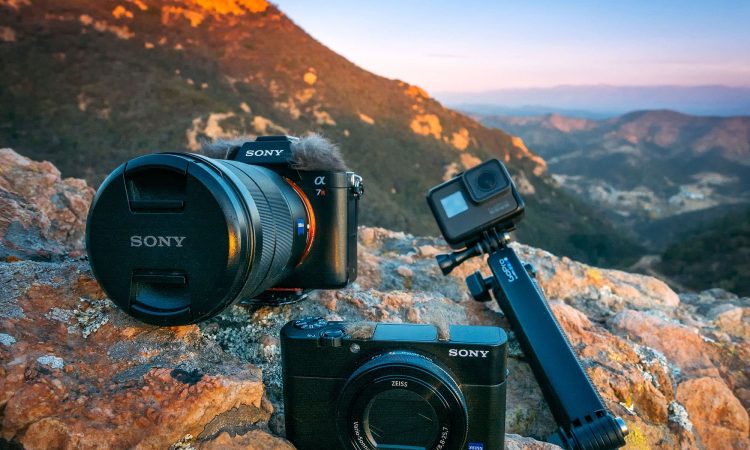
The best travel camera right now for most people is the Sony ZV-E10 II—it is compact, capable, and affordable. For those who want something truly pocketable, the Sony RX100 VII is the one to beat. If you are a serious photographer looking for full creative control without the bulk of a full-frame system, the Fujifilm X-S20 delivers exceptional results in a travel-friendly body.
The right choice depends heavily on how you travel and how you shoot. Someone backpacking through Southeast Asia needs something different from a photographer on a two-week landscape trip through Patagonia. Here is an honest guide with no fluff.
Top Picks by Traveller Type
| Traveller Type | Best Camera | Price Range | Weight | Standout Feature |
| Casual / everyday | Sony ZV-E10 II | ~$750 | 344g | Interchangeable lenses, vlog-friendly |
| Pocket traveller | Sony RX100 VII | ~$1,200 | 302g | 1-inch sensor in true pocket size |
| Enthusiast / hobbyist | Fujifilm X-S20 | ~$1,300 | 491g | Film simulations, superb JPEG quality |
| Adventure / outdoor | OM System OM-5 | ~$1,100 | 414g | IP53 weather sealing, freeze-proof |
| Budget pick | Canon PowerShot G7 X III | ~$600 | 304g | 4K video, easy sharing via smartphone |
| Professional | Sony A7C II | ~$2,500 | 514g | Full-frame in compact body |
What Actually Matters in a Travel Camera
The camera spec sheets are full of numbers, but travelling filters what matters down to a short list:
- Weight and size: Every extra 200g matters after a full day of walking. A camera you actually carry beats a better one left at the hotel.
- Battery life: Larger sensors generally mean shorter battery life. Check shots-per-charge, and always bring at least one spare – airports and remote locations do not always have power.
- Autofocus performance: Modern mirrorless cameras have subject-tracking AF that was unthinkable a few years ago. For street photography and fast-moving scenes, this matters enormously.
- Lens ecosystem: An interchangeable lens camera is only as good as the lenses available for it. Sony E-mount and Fujifilm X-mount both have excellent travel-friendly options.
- Connectivity: Built-in Wi-Fi and Bluetooth for quick phone transfers is no longer optional if you want to post while travelling.
Mirrorless vs Compact vs Action Camera: Which Type?
| Camera Type | Pros | Cons |
| Mirrorless (interchangeable lens) | Best image quality, versatile, future-proof lens investment | Heavier, more expensive, more to carry |
| Compact (fixed lens) | Genuinely pocketable, quick to shoot, no lens decisions | Limited by fixed lens, smaller sensors on budget models |
| Action camera (GoPro etc.) | Waterproof, ultra-durable, great for POV and adventure | Not suitable as a sole travel camera – limited in low light and portraits |
| Bridge camera | All-in-one with extreme zoom range | Bulky for the image quality; small sensors struggle in low light |
A Word on Smartphone vs Dedicated Camera
The honest answer: for casual travellers who shoot in good light and mostly share on social media, a modern flagship smartphone (iPhone 15 Pro, Pixel 9 Pro) produces results that are hard to distinguish from a compact camera in day-to-day use.
Where a dedicated camera pulls ahead is in low-light performance, creative control (manual settings, depth of field), zoom capability, and the feel of using something designed for photography. If taking photos is genuinely one of your favourite parts of travel – not just documenting it – the investment in a proper camera is worth it.
What to Avoid
- Heavy telephoto zooms packed for travel: Unless wildlife photography is the point of the trip, they will spend most of the time in the bag.
- Buying the most expensive option: The difference between a $700 and a $2,000 camera is meaningful in controlled settings – in travel photography, lighting and moment matter far more than sensor specifications.
- Forgetting extra batteries and a quality bag: These accessories often matter more than an extra lens.