
Next-Gen Research Tools: How Hydrothermal Autoclaves & Reactors Are Redefining Material Science!

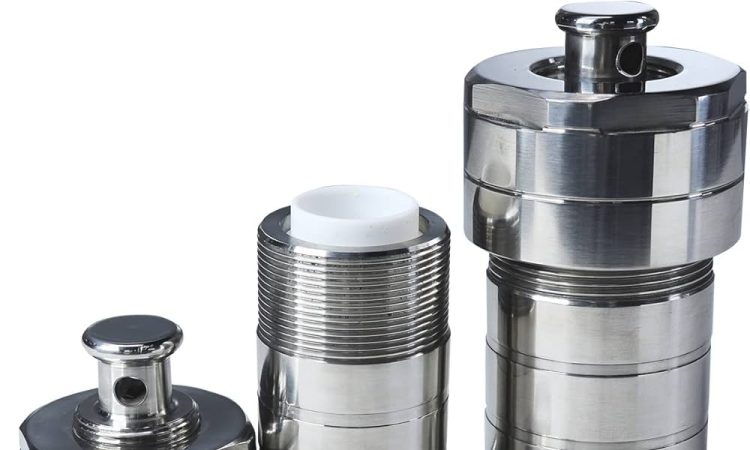
Material science is evolving rapidly, driven by the need for precision experiments, advanced synthesis techniques, and high-pressure research setups. As industries and research institutions push deeper into nanotechnology, advanced ceramics, metallurgy, and chemical sciences, the demand for reliable high-performance equipment continues to grow. Among these tools, Hydrothermal autoclaves and Hydrothermal reactors have emerged as indispensable systems for achieving controlled, reproducible, and high-quality results.
Whether it involves synthesizing nanomaterials, studying mineral formation, exploring new material phases, or performing complex chemical digestion, these technologies are reshaping how scientists work. Today, hydrothermal systems enable research teams to perform experiments that were once challenging or impossible with traditional laboratory equipment.
Why Hydrothermal Technology Leads Modern Scientific Research
Hydrothermal synthesis is widely regarded as one of the most effective methods for producing uniform crystal structures, metal oxides, high-purity compounds, and advanced ceramics. By enabling reactions under precise high-temperature and high-pressure conditions, Hydrothermal autoclaves and reactors can simulate natural geological environments—something essential for next-gen material innovation.
These systems offer unparalleled control over:
- Temperature stability
- Pressure build-up
- Reaction duration
- Reaction pathways
- Material purity and crystallinity
This level of precision allows researchers to create advanced materials used across electronics, semiconductors, batteries, pharmaceuticals, catalysts, and environmental testing.
How Hydrothermal Autoclaves Are Transforming Laboratory Experiments
Hydrothermal autoclaves are compact, corrosion-resistant pressure vessels designed for accurate high-pressure reactions. They are ideal for universities, research labs, metallurgical testing centers, and industrial R&D facilities.
1. Controlled High-Pressure Conditions
Autoclaves create sealed environments where reactions progress safely under elevated pressure—critical for synthesizing materials that cannot form at normal atmospheric conditions.
2. High-Purity Material Production
With precise control over reaction variables, autoclaves help produce materials with consistent morphology and high purity—especially crucial in crystal growth and nanotechnology workflows.
3. Multi-Sample Experiment Support
Many modern hydrothermal autoclaves support multiple digestion vessels or bombs, allowing researchers to conduct parallel tests and significantly reduce experimentation timelines.
Hydrothermal Reactors: Advanced Solutions for Scalable Research
While autoclaves are perfect for small-volume digestion, Hydrothermal reactors offer scalability and enhanced control for complex or high-volume experiments. Their advanced engineering helps industries accelerate material development and optimize experimental accuracy.
These reactors offer:
- Custom heating profiles
- In-situ monitoring
- Uniform temperature distribution
- Higher sample capacity
- Enhanced pressure and mixing control
Hydrothermal reactors are widely used in developing catalysts, engineered ceramics, nano-oxides, specialty chemicals, and energy storage materials.
Key Advantages of Using Hydrothermal Reactors
1. Precision Reaction Management
Researchers can fine-tune temperature, pressure, and reaction kinetics, making reactors essential for developing next-generation nanomaterials and engineered crystals.
2. High Reproducibility
Hydrothermal reactors provide stable, interference-free conditions, ensuring batch-to-batch consistency—crucial for research validation.
3. Safe High-Pressure Performance
Built with corrosion-resistant materials and strong sealing mechanisms, these reactors ensure safe handling of extreme conditions and aggressive chemicals.
4. Industrial Scalability
Their ability to support pilot-scale production bridges the gap between lab research and manufacturing, making them essential for commercial material development.
Applications Across Traditional & Emerging Industries
Both Hydrothermal autoclaves and Hydrothermal reactors are now widely used in:
- Nanomaterial and metal oxide synthesis
- Ceramic and composite material engineering
- Environmental testing and digestion
- Pharmaceutical compound development
- Semiconductor and electronics research
- Metallurgy and mineral analysis
- Battery and energy storage research
Their flexibility and precision make them vital tools for modern laboratories.
Why Hydrothermal Systems Are Essential for Future Material Innovation
As global industries demand lighter, stronger, more efficient, and more sustainable materials, hydrothermal systems create the ideal environment for breakthrough research. These tools help scientists:
- Explore new chemical behaviors
- Understand reactions under extreme conditions
- Develop performance-driven materials
- Shorten research and development cycles
- Achieve consistency that traditional synthesis methods cannot provide
With unmatched accuracy and safety, hydrothermal equipment empowers researchers to push scientific boundaries and innovate with confidence.
Final Thoughts
Material science is advancing faster than ever, and high-pressure research tools are at the heart of this progress. Hydrothermal autoclaves and Hydrothermal reactors provide the controlled environments required for advanced synthesis, precision testing, and experimental innovation. Their ability to replicate unique atmospheric conditions makes them essential for labs working on next-gen materials in nanotechnology, chemistry, environmental science, and industrial R&D.
As research grows more complex and quality expectations rise, these systems will continue to drive the next wave of scientific breakthroughs.